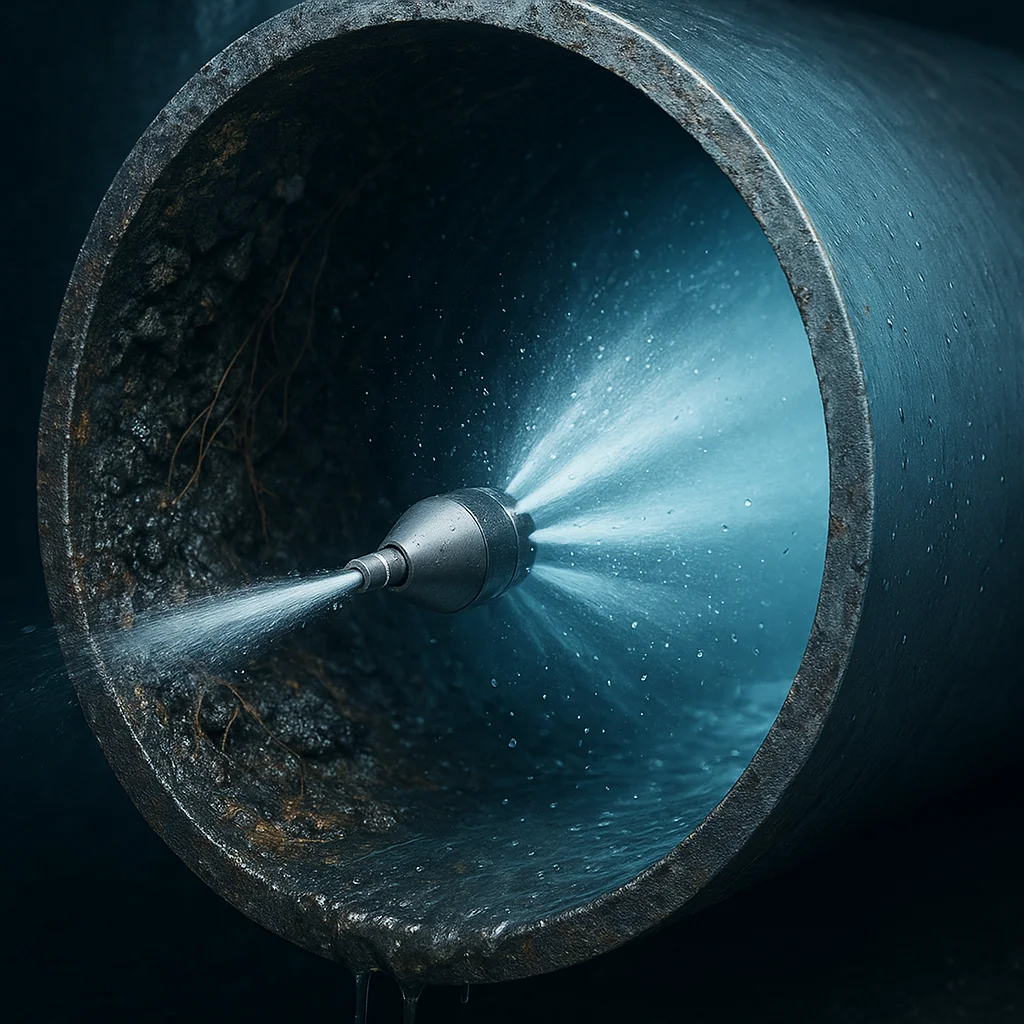
When hydro jetting tackles clogs in Temecula homes, high-pressure water surges through pipes at up to 4,000 PSI, blasting away grease, roots, scale, and debris that snaking can’t touch. This non-chemical method restores full flow in sewer lines and drains common in our area’s older properties and vineyard-adjacent soils, preventing backups without damaging pipes.
Understanding Hydro Jetting Basics
Hydro jetting is a cutting-edge drain cleaning technique used by professionals like Hydro Jetting Temecula Pros. Unlike traditional methods such as drain snaking, which only poke holes through blockages, hydro jetting uses pressurized water to scour the entire interior surface of pipes. In Temecula, where hard water and tree roots from nearby wine country landscapes often cause buildup, this service is essential for maintaining plumbing health.
The equipment involves a high-powered pump connected to flexible hoses equipped with specialized nozzles. These nozzles have multiple jets angled backward to propel the hose forward while directing water forward and sideways to clean 360 degrees around the pipe walls. For Temecula residents dealing with 24/7 hydro jetting for backed up drains, this means quick restoration even during emergencies.
The Science of High-Pressure Water in Pipes
At its core, hydro jetting relies on fluid dynamics. Water, incompressible and accelerated to speeds over 200 mph through small nozzle orifices, generates shear forces that dislodge even hardened deposits. Inside Temecula pipes, typically PVC, cast iron, or clay in older neighborhoods like Old Town, this pressure safely navigates bends and joints without causing cracks, provided it’s calibrated by experts.
Key factors include PSI (pounds per square inch) and GPM (gallons per minute). Residential jobs use 2,500-4,000 PSI and 8-15 GPM, enough to cut through roots invading from the region’s clay-rich soils but gentle on modern pipes. Chemical reactions aren’t involved; it’s pure mechanical action amplified by water’s density.
Types of Nozzles and Their Roles
- Forward-facing nozzles: Penetrate the main blockage head-on.
- Rear jets: Provide propulsion and clean pipe walls behind the nozzle.
- Side-piercing jets: Ideal for lateral lines, tackling grease in kitchen drains common in Temecula family homes.
Technicians select nozzles based on pipe size—1.5-inch residential to 8-inch mains—and diagnose via camera first to avoid surprises.
Step-by-Step: What Happens Inside Temecula Pipes
Step 1: Insertion and Initial Surge
The hose, often 100-500 feet long with a 1/4-inch diameter, enters via a cleanout or toilet. As water pumps in, pressure builds rapidly. Inside the pipe, the nozzle hits the blockage—say, a grease cap from years of cooking wastewater. The forward jet punches through, fracturing the mass and creating an entry path.
Step 2: Scouring and Dislodgement
Now propelled forward, rear and side jets activate. They shear off layers of buildup: fats emulsify and wash away, mineral scale from Temecula’s hard water dissolves under impact, and tree roots (prevalent near De Portola Road vineyards) are pulverized into slurry. Imagine a pipe wall coated in 1/4-inch gunk; the water strips it bare, revealing original pipe texture.
For sewer line hydro jetting, this reaches deep into mains, clearing offsets where debris settles due to our sloped terrains.
Step 3: Flushing and Evacuation
Debris flows downstream in a turbulent wave, exiting via the main sewer or a downstream access point. Cameras confirm cleanliness, showing crystal-clear walls. In Temecula’s variable climate, this prevents winter root growth and summer grease solidification.
Step 4: Post-Jet Inspection
Pros like Hydro Jetting Temecula Pros use sewer cameras to verify results, spotting hidden issues like bellied pipes from expansive soils. This step ensures longevity, often lasting 1-2 years per treatment.
Common Clogs in Temecula and How Jetting Handles Them
Temecula’s unique environment breeds specific problems:
- Grease and FOG: From households and restaurants in Wine Country, forms sticky mats jetting emulsifies.
- Tree Roots: Eucalyptus and oaks near properties infiltrate joints; jets sever them cleanly.
- Scale and Minerals: Hard water leaves calcium deposits; pressure blasts them off.
- Debris and Sediment: Construction silt from growing suburbs like Harveston.
In Old Town Temecula, vintage clay pipes exacerbate these, making emergency sewer hydro jetting a frequent call.
| Clog Type | Hydro Jetting Effect | Temecula Relevance |
|---|---|---|
| Grease | Emulsifies and flushes | High from dining scene |
| Roots | Cuts and removes | Vineyard proximity |
| Scale | Blasts away | Hard water areas |
Benefits Unique to Temecula Plumbing
Beyond clearing, hydro jetting extends pipe life by removing corrosive buildup, reducing future emergency hydro jetting needs. It’s eco-friendly—no harsh chemicals leaching into our groundwater—and thorough, cleaning pipe interiors snaking misses. For Temecula Pros, we see 95% success rates, minimizing repeat visits.
Local tips: Schedule annually if near vineyards; use enzyme cleaners between jets; avoid flushing wipes. Call Hydro Jetting Temecula Pros at for same-day service.
Safety Measures During the Process
Inside pipes, risks like pressure bursts are mitigated by flow meters and auto-shutoffs. Operators wear PPE, and pre-inspections prevent collapses in degraded lines. Temecula’s seismic activity makes pipe integrity checks vital.
Real Temecula Case Studies
A Harveston homeowner faced repeated backups from roots; jetting cleared 200 feet, no recurrence in 18 months. An Old Town B&B’s grease-clogged main was restored in 2 hours, avoiding closure. These showcase jetting’s reliability.
In summary, hydro jetting transforms Temecula pipes from clogged nightmares to smooth pathways, using water’s raw power for superior results.
Leave a Reply